Showing posts with label hop breeding. Show all posts

Thursday, May 10, 2012

The USDA-ARS Hop Research Program – A Modest Proposal for Creating a Sustainable Funding Loop


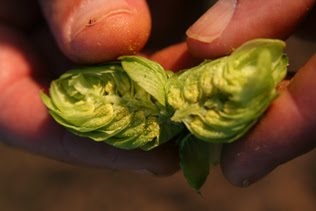
Check out hops from the National
Clonal Germplasm Repository in
Corvallis, Oregon
Part 1 of a 2 part series

Public funding of hop breeding and cultivar development is hardly a political priority. The budget for the USDA-ARS hop breeding program has remained frozen since 2000, at a scant $750,000 per year. Of that, when you factor in inflation, mandated program cutbacks, cost of living adjustments, maintenance and other costs, the amount of money actually available to perform research is a paltry $25-30,000 per year.

The mission, however, remains the same. Since the 1960s, the goal of the USDA-ARS hop program has been “to develop hop germplasm and cultivars that incorporate superior pest and disease resistance, increased yields and enhanced brewing characteristics.”

That’s a mighty big challenge on any budget, let alone one that is radically shrinking with no hope in sight for a fresh infusion of new public money from a tea party inspired Congress that is hell bent on dismantling basic scientific research.

Assuming that the public even has a compelling interest in nurturing the US hop industry (we think, of course, that it does), the question arises: if we can’t count on federal money, and private money is becoming more scarce, what can we do to rebuild our once robust USDA-ARS hop breeding program? How can we insure a sustainable funding stream?

It’s time to think creatively. Let’s break it down. There are at least four major players: 1) the USDA-ARS, which creates the germplasm, 2) the farmers, who grow and test the new hop lines, 3) the brewers who analyze the experimental lines for desirable characteristics, and 4) the private breeders, whose goal is to obtain patents on new hop varieties, license their patents to select growers, and maximize profit.

Under the current model, the USDA-ARS “partners” up with trustworthy farmers to grow out it’s germ lines. Right now the USDA has about 40,000 seedlings from about 50 crosses. To save money, the USDA distributes those plants for testing among growers in Oregon and Washington. The farmers’ costs are generally reimbursed by the Oregon Hop Commission and the Hop Research Council. Instead of cash, private growers and brewers, at least in theory, are asked to pony up “in kind” support.

Under this model, the USDA at least on paper maintains control of the experimental lines. Their legal vehicle for doing that is a “Material Transfer Agreement,” basically a contract between the USDA and the farmer. The MTA is an interesting document. On the one hand, it smartly restricts the grower from transferring the new lines to third parties and from disclosing data from the testing. Parenthetically, there is no budget or staffing for monitoring, inspection, or enforcement.

On the other hand, the MTA acknowledges that new hop lines conceivably could be transferred or shared with third parties, i.e., private breeders, if the farmer negotiated a written deal with the USDA.

Hmmm. This is a new program, only a few years old, so we don’t yet have an instance we know about in which a farmer, either directly or through a proxy, sought to commercial exploit a publically owned experimental hop line. Could it happen? Possibly. Will it happen? Maybe.

So when it does happen, how is the public’s interest going to be protected? Here’s where we need to think about the same mechanisms the federal government uses to extract royalties from oil, timber, cattle and pharmaceutical companies. The idea is for the USDA to negotiate a royalty fee whenever a private breeder intends to market, sell, license or otherwise “own” a new culitvar that’s the direct result of the USDA program.

Think about it. The future of public hop funding is bleak. In the past 12 years, we’ve released two varieties (Newport in 2002 and Mt. Raineer in 2008). Meanwhile, private breeders have been churning out the big bread winners, such as Citra® and Simcoe®. I’m not saying that the breeders behind either of those “homers” had it’s snout in the public trough. They bred great hops, took a big risk, invested a lot of time and money, and won in the marketplace. They should be rewarded.

But what about the future? New and valuable cultivars will emerge from the present USDA/private farmer partnership. In my view, in order to build a sustainable funding loop, the USDA can and should negotiate a co-ownership interest that reflects the value of its contribution. Moreover, it can and should negotiate terms that will bind the private co-owner to license the hop with growers according to fair and transparent criteria.

How much money could this type of model generate? I’m just spitballing here, but the numbers look … meaningful. Take a look at the 2011 US harvest: about 65 million pounds of hops. Of that, about 14.6 million were proprietary hops (not counting Summit, Amarillo and a few others), or about 22% of all hops grown. If, and this is a big if, those proprietary hops emerged from publically owned hop germplasm, and/or were the result of some measure of public funding, and the average price per pound was set hypothetically at $5.00/lb, and we applied only a nominal 5% royalty, then the USDA would be looking at revenue of over $3.5 million per year. That’s almost 5 times more than the entire current budget.

Look, I don't know nothing about nothing, but it seems to me that the people should get a return on their investment. And, in turn, that financial return can and should be reinvested in a fortified basic and applied hop research budget. The US consumer’s appetite for new hops is growing. The demand is there, and so is the treasure. Now it’s up to the USDA to assert itself as a major stakeholder and get back at least some of what we give.

RGW
May 10, 2012

P.S. And by the way, in terms of the public’s interest, don’t forget that we’ve barely scratched the surface on the neutraceutical and cancer-fighting potential of humulus lupulus.

Monday, March 21, 2011

Hop Harvest Time: When and How Do You Know? OSU’s Tom Shellhammer Has A Clue

When is the optimum time to harvest hops for aroma?

How will you know when that optimum has been reached?

Do different aroma oils reach their maximum concentration at different times as the cone ripens?

These are some of the questions that drive Indie Hops to fund hop ‘maturity’ studies at Oregon State University. We are pleased to announce that the results of our first effort to wrestle with this topic will be presented at this year’s Craft Brewers’ Conference in San Francisco by OSU Professor Dr. Tom Shellhammer on Saturday, March 26th.

In late summer and early fall of 2010, Cascade and Willamette hops were collected on three successive weeks at three Oregon locations and analyzed for aromatic compounds by Gas Chromatography and Mass Spectrometry. Thirty-one different GC ‘peaks’ were identified and compared.

In a fortunate coincidence, single hop beers using some of the very same hops were brewed by Deschutes Brewing and later judged by a sensory panel at OSU. This allowed us to relate some of the lab analysis to actual flavor perception in beer, something that will be pursued more fully in subsequent projects.

The complexity of hop aroma is so great that it’s not surprising to find that each attempt to answer one question brings several more to the surface. And although this first study is too limited to produce any grand conclusions, some commonly heard notions about hops now seem to be less certain. If you’re going to CBC, consider attending Dr. Shellhammer’s presentation to judge for yourself.

Perhaps some day we’ll learn that a 5-day difference at harvest can mean the difference between a decent well-hopped craft beer and a remarkable one.

See you at the CBC.

3/21/11

Thursday, August 26, 2010

HopTalk with Al Haunold, Part XI

Freedom Hops: The Case for Public-Private Breeding Partnerships

Those who know me understand that I tend to fixate. I get the sandy grain of an idea, apply loads of constant pressure (with maximum compression around 3 in the morning.) and either a blood vessel bursts or out pops a pearl.

Here’s my latest pearl in process: the need for public-private hop breeding partnerships.

Here’s what started the itch. I was perusing the Strategic Plan of the Hop Research Council (1998, updated in 2007). By way of background, the HRC consists of a few larger brewers and all the usual merchants in Yakima. These are the insiders who have a tremendous influence on the direction of how public research dollars are spent. They also assess themselves certain fees and make additional money from HRC available through research grants.

Now, everybody knows that I think the world of Dr. Al Haunold, an extraordinary public servant I’ve heralded on this blog as “the People’s Hopmeister.” After escaping the Nazi War Machine and emigrating to the US, eventually my Austria-born mentor came to work at the USDA in Corvallis where from 1965 to 1996 he took the lead in releasing to the public over 20 new hop varieties.

Twenty! For Free! Al didn’t patent those inventions. He never saw a dime from any royalties because there were no royalties – not then, not now. Neither did Uncle Sam, nor anyone else on Al’s team of public breeders. Anybody can get access to rhizomes for hall-of-fame US varieties like Cascades, Willamette, Nugget, Liberty, and others – all the hopwork of our Nation’s No. 1 Hopmeister. Anyone can get ‘em, and anybody can grow ‘em.

Al retired in the late 1990s but his final collaborations were not released until the early 2000s, to wit: Newport and Mt. Rainier (both crosses made by Al in 1994), Horizon (cross made by Al in 1970), and the low-alpha Teamaker. By the way, Teamaker’s roots go all the way back to 1970. The brewers were not keen on it because it contained virtually no alpha acids. But his technicians loved it for brewing hop tea.

Since then – the early 2000s -- not a single variety has been released. What happened? Did the USDA lose its edge? Did they surrender? Or did they just in fine George W. Bush fashion hand over the keys to the candy store to private industry?

To answer that, let’s go back to that HRC “strategy” statement that has so jarred me – a statement which in truth prompted me to get into the game and to sponsor an aroma hop breeding program at Oregon State University.

Here it is, verbatim, from the HRC strategic plan (click here to read the entire text).

"While varietal development is a critical requirement for the continued success of USA hop growers, there is some concern that public breeding programs should not be involved in the development and release of varieties."

Huh? What’s so egregious about public servants serving the public? Who voiced this "concern"? Private breeders who saw an opportunity to fatten up with their snoots in the public’s trough? I asked Al whether there was any fuss about him taking his work too seriously, that is, depriving private breeders of their chance to make a buck on the public’s dime.

Al shrugged off the strange insinuation. "No, I wasn’t aware of any concerns. We didn’t start seeing any private breeders in the US until the mid 1980s when the laws for patenting agricultural products became more lenient. Before then, I actively worked with brewers, farmers and merchants, and we all got alone fine." With stellar results.

The HRC statement continues:

"Several private breeding programs actively work towards developing and releasing public and proprietary varieties grown with the support of a marketing system that helps growers sell their product on the world market." (Italics added).

Private breeders release “public” varieties? Well, that’s a new one. Al just had to laugh. “That’s an oxymoron. A private company can’t make a public release. I don’t know what they’re talking about.” Aside from this nonsense, the meaning is clear: the merchant-big grower-breeder industrial complex has set its sights on controlling the world market. That hop hegemony begins with patenting varieties and granting licenses to selected growers. An excellent strategy for controlling the price and supply of US hops.

It gets better:

“In almost all other crops, public breeding programs no longer serve as the major developer of varieties but do serve as developers of germplasm containing a specific trait… Germplasm developed by public programs is then utilized by private breeders for use in the development of superior varieties – the better the germplasm, the better the varieties that are ultimately made.”

Whoa doggies! First, the phony argument that “everybody’s doing it.” Second, no attempt to proffer evidence that the public is hurt by an aggressive, efficient and amazingly productive public breeding program. Third, the cavalier way in which the privatizers skip over any ethical issues and swinishly assert that the fruits of the public’s labors is their god-given birthright.

“I disagree,” Al offered modestly. “If the public program develops the tools that help us breed superior varieties, then the public should continue to be involved in bringing new varieties to market. In fact it’s more efficient, as the tool makers generally know best how to use those tools in the field.”

What does this mean for Al’s legacy of public service? “Well,” Al pondered, “it’s appears to have been ruined by the pursuit of profit. The private breeders smelled the money. They want the public to subsidize the creation of the tools – the germplasm, which can select for higher yields, disease resistance, etc – but not share anything in return. They want to restrict access by farmers. That goes against everything I worked for.”

The privatization model kicked in about the time Al retired (nice send off, boys!). How many aroma varieties have sprouted since then? Amarillo? Well, that’s an aroma, but it wasn’t the result of a private breeding program—the Gamaches found it on their farms and trademarked it, which means only they or their chosen few can grow it. Ahtanum? It’s relatively recent, but we don’t know much about its parentage. Citra is a recent privately developed hop, and by all accounts it’s a home run. But we don’t know much about where the germplasm came from. Was publicly owned germplasm exploited? If so, did the patent owner agree to share any royalties with the public?

And that’s the point. There is absolutely nothing wrong with private breeding. It should be encouraged. It’s risky. It’s expensive. It’s time consuming (8 – 12 years on average). As long as there is robust access to public varieties, the profit margin on any new variety is a matter of speculation. And any breeding mission will necessarily involve brewer feedback, just as Citra did with Sierra Nevada and Deschutes, to name a few.

The wicket gets sticky when private breeders utilize public germplasm, develop a “new” variety and then attempt to patent it for their own personal gain without sharing the fruits. Since patent applicants generally insist on keeping secret their formulas, recipes and designs, they jealously guard the pedigree of their plants like the proverbial rich ugly old maid and her silver spoons.

How are competitors going to know what’s off limits? And how does permanently restricting access to varieties by farmers, growers and other merchants help grow the craft beer industry anyway? And think of the potential for corporate espionage: it’s not inconceivable that breeders will raid USDA germplasm depositories before the cell-lines are publically released. (See the History of CTZ, here.)

That’s one big reason why Indie Hops funded the aroma hops breeding program at OSU. Public hop breeding, especially of aroma varieties, had essentially died not too long after Al retired. Our goal has been to empower OSU to invent, invent, invent. With inventing comes ownership. With ownership comes the right to impose reasonable conditions. With conditions comes the potential for royalties. With royalties comes a predictable revenue stream, a big chunk of which can be re-invested back into a public-private program.

The death of public hop breeding programs, we believe, is not only a shame, it’s a punch in the stomach to the work and legacy of The People’s Hopmeister, Al Haunold. Indie Hops stepped in after InBev/AB pulled out to fund a first-ever aroma hops breeding program in large part to continue Al’s pursuit of hops.

Does this mean we believe we are entitled to complete ownership of any new hop “invention?” Absolutely not. We believe in sharing. We look forward to executing on a public-private model that exacts sweat, skill, equity and labor from each stakeholder and commensurately rewards them while also serving the hop growing and hop-loving public.

Roger Worthington
8/26/10

Thursday, August 12, 2010

Val Peacock Drops Mushroom Cloud of Light and Reason: Crafties, Step Up and Take Action!

Listen up Crafties. Check out the latest issue of The New Brewer. The venerable Val Peacock, Phd, the former hopmeister for Anheuser-Busch, has penned a prophetic essay that you just have to read, digest, ponder and act on.

Peacock makes the following points, which are worth bulleting:
  • Since Inbev bought out Bud in 2008, there’s been a huge void in enforcing quality standards for aroma hops. Or, as IH has been arguing, the Crafties can no longer “draft” off the Big Boys, and to prosper they must take charge in monitoring farm practices, breeding, yields, pest/disease problems, etc.

  • There’s a clear and present danger that the Industrial’s obsession with pre-isomerized and downstream hop products will further erode the quality of domestic production of aroma hops. Or, as IH has inveighed, the Crafties need to invest in the farmers, breeders and merchant who serve their needs, exclusively.

  • Aroma and super alpha hops mature differently, and thus farmers need to harvest them when they are ripe and ready, not when it’s economically expedient. Exactly, that’s why Indie Hops has financed a breeding program at OSU that includes a pilot study that is evaluating the optimal date for harvesting big oily aroma hops.

  • The shift towards super alphas will undermine the diversity, yields and quality of US aroma hops, as well as the survival of many aroma hop farmers, who are now selling hops below the cost of production. Exactly. That’s why IH is investing in select, heritage hop farmers in the optimal terroir for aroma hops, the Willamette Valley. IH works with hop farmers who are committed to investing in quality.

  • Dry-hop lovin’ Crafties crave flavor, but in the absence of AB’s field program, which subsidized aroma quality production, Crafties can expect a decline in to-die-for aromas and flavors. Yes. That’s why Indie Hops has financed a $1 million aroma hop breeding program. That’s why we’ve focused 100% on growing aroma and dual purpose hops.

  • Crafties need to visit the hop farms where their hops are being grown. They need to take an interest in the cleanliness of the fields and equipment, the drying of hops, optimal harvest dates, pest infestations, etc. Can I get an Amen! That’s why IH has been inviting Crafties to come visit the yards of our farm partners. We want you to see, feel, smell and enjoy our bounty. But we also invite you to visit the nearby plant where your hops will be lightly processed, packaged and stored. Aroma hops need TLC in the fields and in the mill and we want you to hold us to the highest standard!

US hop farmers “want to do everything they can to establish long term mutually beneficial relationships with brewers, and they view craft brewers as the future.” Free at last! IH has been sermonizing from the get go that the craft revolution is big and strong enough to support its own network of farmers, breeders and processors who are committed to putting hand-crafted quality over big box quantity.

And, finally, this little mushroom cloud of bright light and awesome reason, which I just have to quote in full:

"Last but not least, don’t expect to buy your hops on the spot market every year below the cost of production and still get good quality, or for that matter, delivery of your hops in short years. This will cost you even more in the long run than paying a sustainable price, and sends a signal to growers that you don't care about investing in hop quality! If the domestic aroma market becomes commoditized as the alpha market, quality will deteriorate." (emphasis added)

Prophetic. Beautiful. Concise. Illuminating. Well written Val. We appreciate the validation. Now let’s take action. Come visit the farms where our diverse variety of non-proprietary hops are being grown. Come watch your fresh hops being converted to plump green pellets at our nearby mill in Hubbard. And we’d be happy to escort you down to Corvallis to visit our aroma hop breeding program lab and fields at OSU.

Roger Worthington
8/12/10