Monday, July 23, 2012

Cascade Cycling Classic Packs a Powerful Punch!


Green is Good.  
RGW rejoicing after
winning the Indie Hops
Green sprinters jersey at
the 2012 Cascade
Cycling Classic.
Well, Indie Hops again sponsored the Cascade Cycling Classic in Bend, Oregon this week and we're proud to see our logos on the winners. 

Francisco Mancebo won the pro men's race in fine fashion, pretty much dominating in just about every category. We're happy for the winner of the sprint competition, Eric Mercotte, of the Elbowz Racing Team out of Dallas, Texas.  They came a long way from the Lone Star State, where hill training consists of repeats on overpasses over the interstate, and our darling underdogs pulled it off.  Eric looks good in the green jersey. Now if we could just get more Texas breweries to green up their brews with Oregon grown aroma hops.

Speaking of hop colored bike jersies, in the Masters races, yours truly is now the proud owner of this coveted garment.  I managed to lose some weight (without sacrificing my two beers a day habit), trained like a madmen, and unleashed the fury on the Mt. Bachelor climb for the Vee in Stage 1.


I'm very happy for the winner of the yellow jersey, Robert Nunes. This man is tough, tough, tough.  Once he donned the yellow, the entire field tried hard to crush him but he would not surrender.  Where did he get that toughness? He's used to the hard life, as he hails from a tiny town on the Pacific coast side of Costa Rica.

Coming and Going
Plenty of action on the
clean streets of
downtown Bend, Oregon
for the pro criterium 
races. 
Indie Hops inda house!
I've been down there, and believe me, it's no picnic climbing a partially paved mountain road with no shoulder, no reflectors, no lights, in the mist, with diesel spewing trucks and busses roaring by you.

Thanks to all the sponsors, volunteers, racers and fans who helped make this years CCC another bona fide classic.  And congrats to Deschutes Brewing for crafting the popular, unique and tasty Chainbreaker IPA.  I drained three pints while announcing the men's pro race with my buddy Splinter Wren and wanted more!

Cheers

Roger Worthington
July 23, 2012

The Bikie's High
I spent exactly 12 hours
in yellow after the first mountain
stage. Between the altitude and 
the voluptuous podium babes,
I must've lost focus.
One Tough Hombre
Here's my new buddy, Robert Nunes,
of Costa Rica, the winner of the
Yellow Jersey in the CCC masters 
races. How does a guy get that 
fit riding on gravel roads and
sand flea infested beaches?

Saturday, May 19, 2012

What's Cooking in the USDA's Hop Kitchen? A Conversation with Head Hopster Dr. John Henning


Dr. John Henning
In Part 1, we talked about a proposal for creating a royalty-sharing program that could help strengthen the public’s hop breeding and research program.

In Part 2, we’ll take a look at what’s happening down in Corvallis at the USDA-ARS hop breeding and genetics program, which is run by Dr. John Henning. Dr. Henning has been managing the hop program since 1998 (CHECK THIS!).1996.

I called up Dr. Henning who was kind enough to give me a snapshot of what’s cooking. First, and this is cool, Dr. Henning reported that despite a shrinking budget he has about 50 crosses and 40,000 seedlings for this years breeding nursery. Within that “gene pool” he has a “seedless” Perle derivative, as yet unnamed, that has shown promise. Because of a downey powdery mildew invasion in the USDA greenhouses in Corvalliswhere his material was being evaluated a few years ago, most of his genetic material has been moved to WSU greenhouses in Pullman,located in Washington.

Dr. Henning is very excited about the “in kind” support the USDA has been receiving from farmers. The partnership has allowed him to “ramp up” the intensity of his benchwork research on crossing, propagating and selecting promising hop lines, without having to manage greenhouse and field trial operations. Unlike the Indie Hops-OSU breeding program, Dr. Henning’s focus is on both aroma and super alpha development, no small order.

I was curious about the process for “checking out” public and experimental hop varieties from the USDA germplasm repository in Corvallis. The repository contains clones of about 200 public varieties and 100 experimental lines. To be sure, unlike a public library, you can’t just walk in ask for rhizomes for your backyard garden. The purpose of the repository is to collect, preserve and distribute hop material to foster research.

Here’s a few questions I posed to Dr. Henning about the “in kind” support paradigm, the inside scoop on his Perle brainchild, and the stuff that keeps him motivated and up at night.

RGW: I just want to make sure I have this down right. The USDA does not supply germplasm to farmers for testing; rather, you provide rhizomes, or plantlets to select farmers who then propagate and grow them out? Does anyone outside of the parties who sign the MTA [Material Transfer Agreement] have knowledge of what's being tested or where?

JH: The USDA-ARS breeding program provides rhizomes of experimental lines directly to a grower or growers who are under contract (Material Transfer Agreement) to grow out said experimental lines for “On-Farm trials.” These growers are chosen by the respective State Hop Commissions (OHC and WHC) and Hop Research Council (HRC) to perform this function. Funding is typically provided the grower(s) to recompense them for their costs—in most cases this is around $6000 per acre. In all cases, State Commissions and members of Hop Research Council (HRC )(FOOTNOTE1) are fully aware of what experimental lines are put into those trials.

HRC members and State Commissions have made specific requests regarding which experimental lines they would like to see sponsored in “On-Farm” trials. USDA-ARS can also suggest experimental lines if not included on the list of lines HRC or State Commissions select for advanced testing. Finally, The USDA-National Clonal Germplasm Repository does not provide any experimental lines to growers, merchants, brewers or other researchers unless specifically requested by myself. Typically, this is done in cases where researchers from different countries and breeding programs have agreed to germplasm exchanges of important material. It is in this fashion that USDA-ARS was able to obtain true dwarf hop germplasm for genetic and breeding research—by agreeing to provide pollen from USDA-ARS hop male lines that were not released as well as a few publically released hop varieties such as Teamaker and Newport.

RGW: So you don’t hand pick the farmers for testing experimental lines?

JH: Correct. I don’t pick the growers. I use both WA and OR growers and these growers are selected by their respected State Hop Commissions and the HRC.

RGW: Can you tell us more about the Triploid Perle you’re working on? Has anyone pilot brewed with it?

JH: The information on Triploid Perle is contained within the HRC yellow book reports. The triploid Perle line is a true seedless hop, which is highly desirable as Perle is normally a prolific seed producer. It has somewhat of a higher alpha at 11-12 % with beta acids around 4- 5 %. Yields for this line are tremendous—potentially on par with some of the “supers” that are out there. In addition, it’s high in essential oils that give floral and citrus notes. Finally, it has oil content exceeding 1.5 ml per 100g of dried cone. OSU’s Fermentation Science program is the only “micro brewery” to pilot brew with it. I’m sure others would love to experiment with it but I only have had hops from a single plant at the moment. After tasting the single hop brew that Tom Shellhammer (OSU) made, several breweries have expressed an interest in it. Unfortunately, I went from a single hill to multi-hill plots in 2011 and plants were in their baby year last year. There should be sufficient hop this upcoming harvest for multiple pilot brews by HRC members. It’s being grown on 40 hill plots in both Oregon and Washington. These plots are being sponsored (financially) by HRC.

RGW: You read about the number of Oregon hop farmers declining over the past few decades. What are your ideas for keeping the Oregon hop industry vibrant?

JH: My mandate from Congress is to for keep theing USA hop industry vibrant, not just Oregon. With that in mind, my best contribution would be to continue developing superior germplasm and cultivars that allow US growers to outperform other nations and make a finished beer that tastes better than beer made from hops from other regions of the world. With this said, Oregon growers have been particularly hurt by the surplus of ‘Willamette’ that was grown in the past and which was stored. This surplus has resulted in a significant drop in acreage (6000 to 3000) that has not been replaced by another line yet.

As you know, Willamette is susceptible to fungal pathogens and a replacement is needed for growers and brewers. The USDA-ARS and WSU are working closely with HRC brewery members to develop and release a disease resistant, higher yielding aroma hop as a replacement for Willamette. It is highly likely that a new public hop variety (Such as Mt. Rainier or the Triploid Perle) will be chosen to replace Willamette when inventory of Willamette is used up. If this occurs, we would most likely see a dramatic improvement and vibrancy of the Oregon Hop industry, as well as in Washington and Idaho (both of which groew Willamette).

RGW: What research topics most invigorate you? What are you most passionate about? What's your "dream legacy?"

JH: That’s a tough question!! I’m multi-faceted in what invigorates me and gets me passionate. I would love to have the legacy that Dr. Haunold obtained by developing superior hop varieties that are grown to a great extent throughout USA. At the same time, I’m striving towards developing molecular marker systems that would enable breeders to be more precise in selection as well as speed up the selection process. Finally, I’m striving towards working with other renowned hop scientists to completely sequence the hop genome. To achieve all three of these goals would be my “dream legacy.”

RGW: What's the story on Mt. Raineer, which you released in 2006?in 2008? Who's growing it? What was your target or objective in developing the cross? What was the production in Oregon on Raineer last year, if you know?

JH: Mt. Rainier is a fine hop that hasn’t taken off yet. I see it as a victim of outside circumstances—mainly issues of supply and demand in nature. Just prior to the release of Mt. Rainier, there were two years of crop failures. This was followed by a dramatic increase in planting new hops (including Willamette here in USA and Halletauer Mittelfrue in Germany). The result of this dramatic increase in hop plantings resulted in a significant oversupply of hops and hop products. Mt. Rainier was released right after this huge oversupply of hops occurred and there was very little demand for hops--new or old. The production and distribution of Mt. Rainier was also hampered by the appearance of hop stunt viroid in 2008. To make a long story short, it was entered into the Clean Plant Network as soon as possible and if I’m not mistaken, will become available this year for limited distribution of cuttings. While it was in on-farm trials at John Annen’s [FOOTNOTE 2] farm (5 AC), it was distributed to several craft brewers.

From the limited responses I received back, it was viewed as an excellent hop on par with, and similar to, true Halletauer Mittelfrue grown in Germany. Unfortunately, there was a huge oversupply of Halletauer Mittelfrue that was being sold for ~$1.50 lb and brewers saw no reason to pay $3.50/lb for Mt. Rainier when they could buy Halletauer for $1.50/lb. When Mt Rainier was growing in the 5 AC plot at John Annen, he regularly obtained 12 bales per ac. He barely had to spray for downy mildew and never had to spray for powdery mildew. My target in developing this hop variety was one of developing an aroma line that was somewhat higher in alpha acids and was disease resistant with excellent yields and good pickability.

RGW: What is your worst fear about the future of Oregon hop f harm farming -- in terms of disease or pest invasion? What are you doing to anticipate and prevent major catastrophes? (Now that's a tall order!)

JH: In some sense, it’s already occurred. The hop stunt viroid has the potential for making hop farming extremely difficult both here in OR as well as WA and ID.

Furthermore, the potential advent of hop powdery mildew races that are “male AND female” as opposed to “either male OR female” and capable of mixing up genes from several races in the Pacific Northwest may make breeding hop lines resistant to powdery mildew extremely challenging. What this means is that new races of powdery mildew can arise quickly and overcome current plant resistance in hops found in such lines as Nugget or Newport.

Currently, I’m working on identifying molecular markers that will aid in selection for experimental lines that are resistant to both powdery and downy mildews. Once identified, these markers will help speed up the selection process as well as increase the accuracy of selection. I work closely with Dr. David Gent (USDA-ARS Plant Pathologist) in screening new breeding material for experimental lines that are resistant or highly tolerant to both pathogens. This is time-consuming, labor intensive and expensive doing things the old fashioned way—inoculate with the disease and visually chose resistant lines. We’ve had some success in developing new experimental lines that appear to have better “resistance packages” than currently grown varieties. These lines are working their way through the “breeding cycle” which can take upwards of 10 years before public release.

RGW – Thanks John. You’ve got a full plate. Naturally, I’m worried that hop research is being underfunded. I’ll take a look at the public funding of table and wine grapes, as an analogue to hops. My cursory research shows that the USDA-ARS budget for grapes has actually been increasing over the past few years, and is now up to over $15 million, with $2 millon dedicated to grape breeding and genetics alone. As we discussed in the last blog, the total USDA-ARS budget for hops is around $750,000, with only a fraction of that available for actual programmatic research.

I think it’s time to apply political pressure. A hearty collection of diseases could wipe out entire crops, and we haven’t even talked about pests. To keep up with an ever-changing battery of pests and diseases, we need a strong federal hops research program. And the last thing this industry needs is a concentration of breeding, growing, and processing muscle in one place. Wine grapes, for example, are grown in dozens of states and the USDA allocates funding to research facilities in 7 states.

More to come.

RGW
May 18, 2012

FOOTNOTE 1. Hop Research Council members include two craft brewers, Boston Beer and Sierra Nevada, and “industrials” such as Anheuser-Busch-Inbev, Heineken and Miller Coors. The HRC hop dealers include: Hopunion, Haas, Steiner, and Yakima Chief.

FOOTNOTE 2. John Annen is the Chair of the Oregon Hop Commission, which was created in 1964 to protect, serve and enhance the Oregon hop industry, as well as a hop grower and owner of Annen Farms.


Thursday, May 10, 2012

The USDA-ARS Hop Research Program – A Modest Proposal for Creating a Sustainable Funding Loop


Check out hops from the National
Clonal Germplasm Repository in
Corvallis, Oregon
Part 1 of a 2 part series

Public funding of hop breeding and cultivar development is hardly a political priority. The budget for the USDA-ARS hop breeding program has remained frozen since 2000, at a scant $750,000 per year. Of that, when you factor in inflation, mandated program cutbacks, cost of living adjustments, maintenance and other costs, the amount of money actually available to perform research is a paltry $25-30,000 per year.

The mission, however, remains the same. Since the 1960s, the goal of the USDA-ARS hop program has been “to develop hop germplasm and cultivars that incorporate superior pest and disease resistance, increased yields and enhanced brewing characteristics.”

That’s a mighty big challenge on any budget, let alone one that is radically shrinking with no hope in sight for a fresh infusion of new public money from a tea party inspired Congress that is hell bent on dismantling basic scientific research.

Assuming that the public even has a compelling interest in nurturing the US hop industry (we think, of course, that it does), the question arises: if we can’t count on federal money, and private money is becoming more scarce, what can we do to rebuild our once robust USDA-ARS hop breeding program? How can we insure a sustainable funding stream?

It’s time to think creatively. Let’s break it down. There are at least four major players: 1) the USDA-ARS, which creates the germplasm, 2) the farmers, who grow and test the new hop lines, 3) the brewers who analyze the experimental lines for desirable characteristics, and 4) the private breeders, whose goal is to obtain patents on new hop varieties, license their patents to select growers, and maximize profit.

Under the current model, the USDA-ARS “partners” up with trustworthy farmers to grow out it’s germ lines. Right now the USDA has about 40,000 seedlings from about 50 crosses. To save money, the USDA distributes those plants for testing among growers in Oregon and Washington. The farmers’ costs are generally reimbursed by the Oregon Hop Commission and the Hop Research Council. Instead of cash, private growers and brewers, at least in theory, are asked to pony up “in kind” support.

Under this model, the USDA at least on paper maintains control of the experimental lines. Their legal vehicle for doing that is a “Material Transfer Agreement,” basically a contract between the USDA and the farmer. The MTA is an interesting document. On the one hand, it smartly restricts the grower from transferring the new lines to third parties and from disclosing data from the testing. Parenthetically, there is no budget or staffing for monitoring, inspection, or enforcement.

On the other hand, the MTA acknowledges that new hop lines conceivably could be transferred or shared with third parties, i.e., private breeders, if the farmer negotiated a written deal with the USDA.

Hmmm. This is a new program, only a few years old, so we don’t yet have an instance we know about in which a farmer, either directly or through a proxy, sought to commercial exploit a publically owned experimental hop line. Could it happen? Possibly. Will it happen? Maybe.

So when it does happen, how is the public’s interest going to be protected? Here’s where we need to think about the same mechanisms the federal government uses to extract royalties from oil, timber, cattle and pharmaceutical companies. The idea is for the USDA to negotiate a royalty fee whenever a private breeder intends to market, sell, license or otherwise “own” a new culitvar that’s the direct result of the USDA program.

Think about it. The future of public hop funding is bleak. In the past 12 years, we’ve released two varieties (Newport in 2002 and Mt. Raineer in 2008). Meanwhile, private breeders have been churning out the big bread winners, such as Citra® and Simcoe®. I’m not saying that the breeders behind either of those “homers” had it’s snout in the public trough. They bred great hops, took a big risk, invested a lot of time and money, and won in the marketplace. They should be rewarded.

But what about the future? New and valuable cultivars will emerge from the present USDA/private farmer partnership. In my view, in order to build a sustainable funding loop, the USDA can and should negotiate a co-ownership interest that reflects the value of its contribution. Moreover, it can and should negotiate terms that will bind the private co-owner to license the hop with growers according to fair and transparent criteria.

How much money could this type of model generate? I’m just spitballing here, but the numbers look … meaningful. Take a look at the 2011 US harvest: about 65 million pounds of hops. Of that, about 14.6 million were proprietary hops (not counting Summit, Amarillo and a few others), or about 22% of all hops grown. If, and this is a big if, those proprietary hops emerged from publically owned hop germplasm, and/or were the result of some measure of public funding, and the average price per pound was set hypothetically at $5.00/lb, and we applied only a nominal 5% royalty, then the USDA would be looking at revenue of over $3.5 million per year. That’s almost 5 times more than the entire current budget.

Look, I don't know nothing about nothing, but it seems to me that the people should get a return on their investment. And, in turn, that financial return can and should be reinvested in a fortified basic and applied hop research budget. The US consumer’s appetite for new hops is growing. The demand is there, and so is the treasure. Now it’s up to the USDA to assert itself as a major stakeholder and get back at least some of what we give.

RGW
May 10, 2012

P.S. And by the way, in terms of the public’s interest, don’t forget that we’ve barely scratched the surface on the neutraceutical and cancer-fighting potential of humulus lupulus.

Friday, April 27, 2012

Meridian featured in the 2012 Craft Brewers Conference Symposium Ale, Yippee!


The buzz is building. Meridian has crossed the Oregon border. Our friends down in San Diego at Karl Strauss have just bottled up a hop bomb, exploding with flavor, to welcome the thousands of brewers who will celebrate all things crafty at the 2012 Craft Brewers Conference.

This bad boy, tongue-in-cheekily monikered as a ho hum “San Diego Pale Ale, which is sort of like calling an MX missile a “bottle rocket,” comes in at a burly 10.2% ABV and 95 IBU. Welcome to San Diego, where it ain’t beer if it doesn't sprout a fully loaded hop vine.

A few months ago we sent a brewers cut of Meridian to Paul Segura, the master brewer at Karl Strauss. He took one whiff and spontaneously uttered whilst the eye lids fluttered: “We have got to dry hop our Symposium Ale with this beauty.” And he did, along with his righteously motivated brethren within the San Diego Brewers Guild.

This afternoon Chris Cramer, Karl Strauss’ preternaturally cheerful CEO, ordered me to “get down here now” and taste this beauty. Words like “floral,” “aromatic,” “incredible,” "tropical fruity," and “unique” burst forth like fireworks exploding on the Fourth of July.

We can’t wait to see our little darling perform on the Big Stage. To be sure, all glory to our friends in Yakima, who furnished the Columbus and Citra for this ruthlessly hopped special release. Indie Hops is overjoyed to have provided the Crystal and Meridian.

A funny sidenote – the press release on the San Diego Pale Ale on “The Beer Spot” blog identifies our contribution as “Columbia.” This, my friends, is an honest and totally understandable mistake – we thought it was Columbia too until we did a whole lotta digging, testing, evalutating, measuring, and musing.

Here’s a picture of the Symposium Double IPA wolf in sheep’s clothing.


And here’s a picture of the commemorative poster, including Indie Hops, the little engine that could… Note that the Hops logo (the circle with the cultivars: "Columbus, Citra, Crystal..." also misidentifies our Meridian as "Columbia." Honest mistake, nobody's perfect.

Let’s toast to the glory of hops, malt, water, yeast and TLC! Make sure to stop by our booth. Jim, Matt and I may be short on most of our 2011 inventory, but our 2012 harvest is only months away. We appreciate your support and friendship.

RGW
4/27/12

note:  photos courtesy of:
http://www.thebeerspot.com/news/article/2012/04/karl-strauss-s-2012-craft-brewers-conference-symposium-ale

Thursday, March 22, 2012

Columbia Debut Delayed as Meridian Steals the Show


The Story of the Discovery of a New Oregon Hop

Oh dear.

Remember Columbia? The “sexy” sister to Willamette unceremoniously banished years ago to the basement of hop history? Remember how we gleefully announced that we had resurrected this beauty? That we’d be the first to grow it commercially? And that our craft friends couldn’t wait to set her free?

Separated at Birth, Indeed
We originally reported that the hop on the left
was "Columbia" and the one on the right
was it's sister, Willamette. Turns out our
"Columbia" was actually a new plant,
which we've coronated as "Meridian
Well, we grew her, and dried, baled, and pelleted her, but a funny thing happened on Columbia’s walk down the red carpet. Since nobody had ever “dated” her before, we didn’t quite know what to expect. We suspected she’d be a beauty, with a slightly higher alpha than her floral sister, but this Gal quite simply dazzled us beyond our wildest dreams.

One by one we brought in some of the finest snouts in the land to give her a rub and sniff. It was fun to watch. We’d fill a table with several fresh varieties and our guest would do the dance, concentrating hard, earnestly associating the aroma with descriptors. Without exception, they’d take a whiff of the unlabeled “Columbia” pile and stop in their tracks, arrested, if you will, by the stunning uniqueness. We began hearing words like “Meyer lemon pie.” “Fruit punch.” “Unique.” And “wow!”

The evidence began piling up. When we harvested her, the drying room at Goschie Farms bloomed with a strikingly unique and pleasant aroma. We suspected she’d be different than Willamette, but this different? Something was …. off, in a good way.
We sent her off for a chemistry profile. More and more brewers who sniffed her were amazed at her uniquely fruity aroma. Could it be? We waited. The results came back. Per the literature, we expected Columbia’s alpha-beta ratio to come in at 2:1. But, at 1:1.5, this spunky girl flipped the ratio. She wasn’t just a shade different, she was looking like a brand spanking new leaf!


What's in a Name?
That which we call a Columbia
by any other name, say,
hmmm, "Meridian," would smell
as sweet. With apologies to Bill Shakespeare.
We ran more chemistry. It became evident that she was not Columbia. But what was she? The only pedigree that came close was Glacier. But a defining characteristic for Glacier is her super low cohumulone, at 12%. Compare that to the mystery girl’s CoH, at 45%. They didn’t match.

We ran through all the databases, looking for a match. The conclusion was inescapable: nothing matched. We had found a new hop, a strikingly beautiful new hop that packed a powerfully unique new aroma. We called our customers who had ordered Columbia and with a mixture of excitement and trepidation explained that what we thought was Columbia wasn’t Columbia. Thankfully, our customers shared our enthusiasm for this new find, and offered congratulations.

Suddenly, we had a million things to do. We had printed up a bunch of t-shirts that showcased the debut of Columbia, the famously forgotten Sister. We had to hold on to those. We had to delay putting in new acreage until we could learn more about the agronomy and disease/pest resistance of the new plant.

And we had to give our mystery girl a name. That wasn’t hard – we discovered the plant on Goschie Farms within a few meters of a country road named “Meridian. “ Meridian – a navigational term, an imaginary circle on the planet passing through the North and South poles, but also used in conversation to mean the “zenith” or “summit.” Hmm. We like that. Wherever you are, when you’re drinking a beer hopped with Meridian, you’re approaching the zenith or summit of flavor.

Back to the Basement,
Dear Sweet Hidden Sister
The good news is that when Columbia finally debuts,
we've got a boatload of commemorative t-shirts ready to roll!
As of this writing, the brewer feedback continues to pour in. One brewer has used it in a single hop lager beer, which he described as “clean” and “crisp” with a “refreshing sweet lemon character.” Meridian has also raised eyebrows and oxytocin injections (Ok, made that up) in a wide range of ales, from pales to dark roasted malt “winter seasonals.” It’s reported to play well with Belgian yeast and has a way of amplifying the zesty zing of weissbiers.

We’re excited over here, about excited as anyone should be allowed to get over the discovery of a “sexy” new hop plant. We want to thank Gayle Goschie for her well-intentioned but fortuitous “mistake,” Dr. Shaun Townsend who helped us determine that “Columbia” wasn’t Columbia, and all of our friends in the craft brew world who basically said we don’t care what you call it, we just want more of it!

At the same time, on a somber note, we’re mindful that poor Columbia, as mighty and strong and beautiful as we know she is, will have to wait another few years for her big night in the spotlight.

RGW
3/22/12


In Pursuit of Columbia
Dan Kopman of Schlafly Beer in St. Louis
was our first customer to order Columbia. Shown here,
on the left, with Gayle Goschie, R. Worthington and
Matt Sage (left to right). Goschie Farms, July 2011.

Wednesday, February 29, 2012

More Aroma Oil, Faster: The Dry Hopster’s Holy Grail


OSU tests IH pellets vs Cones for aroma intensity and oil extraction rates

OK. OK. You want more aroma. Do you dry hop with whole cone hops, or pellets? And how long? You’ve got limited capacity. Do you dry hop for a week, or something less than that?

Questions. For answers, where do you turn? A textbook? A magazine? Your buddy? The BA message forum? Google? Or do you just wing it?

We tried all of the above, but decided the questions were serious enough to warrant serious study utilizing the scientific method and the best available technology.

In short, we called Peter Wolfe and Dr. Tom Shellhammer at Oregon State University. They spent a year researching the questions. It’s pretty interesting, even for a liberal arts guy like me. In fact, it’s fairly startling.

We won’t post the study here, as it has not yet been published. But, for details, give us a call, and we’ll give you a closer look at the data. For now, here’s a summary.

* A 10 member sensory panel evaluated the intensity of dry hop aroma from Cascade pellets and whole cones and concluded that the pellets provided more intense aroma.

* Beer samples dry hopped for one day had significantly more aroma than beer dry hopped for 7 days.

* Irrespective of form (pellet or whole cone), the concentrations of hydrocarbon terpenes (eg, myrcene, humulene and limonene) peaked between 3 and 6 hours in dry hopped beer and then declined, while the concentrations of terpene alcohols (e.g, linalool and geraniol) continued to increase throughout the 24 hour dry hop extraction.

A few caveats.

First, not all pellets are the same. The pellets used for this study were supplied by us, Indie Hops, and we’ve previously shown that our pellets are different in terms of the average particle size, the diameter and the “bakedness” (our grist is extruded at between 106F and 115F).

We’re gratified to learn that our pellets produced about twice the intensity of aroma than whole cones. That’s huge! The conclusion reinforces what common sense told us: nature designed the hop flower to keep the oils “in”, not let them out, while IH pellets were designed by guys who wanted to get the oil “out.” We deliberately designed our mill to chop up the cone in bigger, coarser particles so that we could open up without pulverizing the oil-exuding lupulin glands.

Second, the rapid extraction rates were likely influenced by the temperature of the solution (23.3C, which may not be representative of real world conditions), and the hops were continually stirred. Although there’s been ongoing anecdotes and discussion about methods for agitating or recirculating/re-entraining hop grist in the tanks, we don’t have a reasonably available tried and true technology for re-suspending hops during dry hopping.

The research suggests, however, that the machinery needed wouldn't be too terribly difficult, and it only need to engage for a few days.

Third, the sensory panel consisted of 10 trained beer geeks who measured the aroma intensity on a scale of 0-15 based on the smell, not taste. To quantify the aroma compounds extracted (e.g., linalool, myrcene, etc), as well as the extraction rates, OSU used all the usual hi-tech stuff.

The take home: if you don’t have a torpedo, prefer (IH) pellets over cones, don’t have limited tank capacity and like big oily aromas, you’re not measurably losing anything, other than lore points, by not using whole cones.

And if you really love big oil, keep noodling and tinkering with new ways to keep those pellets circulating. And if you really love big oil but aren’t big, if you can keep those pellet particles suspended, you might also be able to save money by shaving 3-4 days from the standard dry hop schedule.

In the meantime, we’ll keep asking the questions.

RGW
2/29/12

The name of the unpublished manuscript is: “Dry Hop Aroma Extraction and Sensory Evaluation Report on Phase II dry hopping experiments,” by Peter Wolfe and Thomas H. Shellhamer, Ph.D, Dept. of Food Science and Technology, OSU, Corvallis, Or. (1/2012).

Note: Check out these Guth Portable Agitators used for mixing, stirring and homogenization of liquids such as wine. Could the same technology be modified for use in agitating hops during dry hopping?


Thursday, February 16, 2012

Our Prez Loves Local

Corona Del Mar, CA.

Good news Craft World: President Obama loves local.

File this in the shameless “didjaseeme” department, but I have to share this. A few hours ago, I had a chance to meet President Barack Obama. You know how it works, you pay down the money, you get cleared by the secret service (whew!), you sit down over cold cuts with fellow muckety-mucks, and you get a few seconds with the most powerful man in the world.

How did I use the time? Plugging craft beer, of course. The President, pardon the pun, was all ears (hah!). When I talked about supporting local farmers, he didn’t merely jump on the sound bite, he wrestled it to the ground and owned it.

“Local? I got your local,” went The Prez. “We’ve got honey beer in the White House. Honey from bees in boxes right there near the rose garden.”

Who brews it, I asked, thinking that my good friend Jim Koch had his prints all over the prize. But no. Not only is a key ingredient sourced in the backyard, the beer itself is made in the kitchen.

I’m here to break the news: Our Prez is a backer of Home Brews!!! Turns out the White House chef, Sam Kass, and his friends have been dabbling in honey beers for some time.

When I mentioned the divine properties of Oregon grown hops, Our President didn't skip a beat. “I’d like to try some of that.”

Indie Hops is on the case. We will not rest until Our President is cooking up home brews in the White House using hops from the Willamette Valley. Or better, we’ll send him a few rhizomes, and he can plant a few Oregon hop emeralds in his backyard right next to those honey bee boxes.

By the way, it should come as no surprise that President Obama is a big fan of craft beer. He devoted a good part of his speech to the wonders of tinkering, dabbling, cultivating your muse, following your own genius, and challenging the status quo.

Cheers!

R. Worthington
Feb. 16, 2012

Well, after writing the above, it turns out this is no scoop (see below). I will investigate the hop planting operation and report back. Well done Sierra Nevada!

-----------------------------------------------------------------------------

Home Brew In The Whitehouse
December 9, 2011

It was reported earlier this year that the First Family had served a homebrew in the White House during the 2011 Super Bowl.

And this was just not any homebrew. It was brewed by a White House chef with honey collected from the White House Garden.

President Barack Obama, more than any President in recent history, has often spoken of his love for craft beer & his fondess for his Illinois-based brewery Goose Island & the Chicago brewpub Piece.

Click here to view the full article courtesy of Home Beer Brew.

Saturday, October 1, 2011

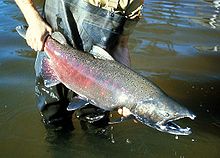
Chinooks Return To Oregon

Here’s the deal. Jim likes to catch fish and I like to eat ‘em, especially fish loaded with Omega 3s, like King Salmon, also known as Chinooks.

A few years ago we learned that the endangered Chinook, allowed to fatten up on plankton and moderately free from the threats of hooks, nets and overheated salt water, were predicted to make a record run in Oregon. And come back they did, more than doubling their population.

Jim didn’t go out to the Columbia or Deschutes to rope a “June hog,” but we both took comfort in knowing the mighty Chinook were thriving in the clean cold Columbia, as well as it’s Oregon tributaries.

It wasn't lost on us that meanwhile, in the Willamette Valley, another fatty packed with acid and oil, the Chinook hop,  was nowhere to be seen. Gone. Flushed out. Moved to Washington. We learned that Chinook hadn’t been grown in Oregon for about 20 years, for no particular reason. In our quest to diversify hop crops in Oregon, this glaring absence was simply unacceptable.

We contacted our friends at the Coleman Farms and they said” bring it on.” So in 2010, the same year the Chinook salmon made their triumphant return to Oregon in record numbers, we planted Chinook hops down on the famous "alluvial farm," within casting distance of the Willamette River.

We’re glad we did. Sure, it’s not the easiest hop to grow, as it has only moderate disease resistance to Downy mildew. But the Colemans -- burly, smart and themselves genetically designed it seems to thrive and win in any environment, enjoy a challenge. With about 80 years of hop growing experience in the family, the Colemans were not going to let the threat of mildew deter them, especially in view of the major advances made to combat DM in the past 12 years.

For a baby year harvest, we’re very, very pleased. The yield was just a tad under our projections, but when you consider we just weathered the coldest and wettest spring in Oregon’s recorded history, we’re high-fiving.  Not breaking metatarpels, but slamming the palms with sufficient force to produce an audible "smack." Looking forward, as the Chinooks continue dig in, we’re optimistic about next year’s mature harvest.
 
Would you look at those side arms! 
A fat, healthy row of Chinook hops, flanked by
hop blood brothers John and Tom Coleman,
down on the Alluvial Farm near
Independence, Oregon (August 2011).
More importantly, the brewers who’ve rubbed and sniffed our 2011 Chinook harvest have been delighted. The Chinook, at around 13.6% alpha acid normally, was once used primarily by industrials, such as Coors, as a bittering hop. Today, this dual purpose Golding/Brewers Gold derivative has also shown value for it’s aroma profile, which registers from herbal to smoky to grapefruity (see Stone’s flagship “Arrogant Bastard,” as an example).

That in mind, we’re not uncomfortable with the alpha acid of our 2011 baby crop, which came in just under 10%. Several brewers have noticed a slightly improved herbal and citrusy aroma than what they’re accustomed to -- they're happy, we're happy. Shortly, we’ll have the numbers on the total oil, which can range anywhere from 1.24 to 2.63 ml/100 g. A rich, resiny hop with an underrated aroma that, we believe, is well suited for both Oregon’s Willamette Valley and the craft brewer’s fermentation tanks.

As the saying goes, the only shot you never make is the one you don’t take. Indie Hops is dedicated to expanding the menu of aroma and dual purpose hops in the Valley, a mission which we hope and believe will help rebuild Oregon’s pre-eminence as a leading supplier of hops while also bolstering new beer flavors for craft brewers.

In the old days, the white water rivers of the Pacific Northwest were so thick with salmon returning home to spawn according to legend you could walk across without getting your feet wet. Next year, we're anglin' for a boomer crop of greenies so big and fat with oil they blot out that famously hot Oregon sun.


RGW
Octobert 1, 2011

Who Dat? 
Why, that’s Jim Koch, the irrepressible and boundless craft beer Ubermensch. What’s he doing? Why he’s doing what he does best: inspiring, perspiring and pontificating, while the dangling Chinooks whisper: catch me, if you can.  (Alluvial Farm, August 2011)

There He Is Again! 
Jim Koch and hop enchantress Gayle Goschie, down on the farm, while the Nuggets pour in like the nearby Silver Falls.  Silverton, Or (August 2011).
He’s Everywhere! 
Jim Koch breeding good will with hopmeister Dr. Shaun Townsend, Ph.D, at the OSU hop farms in Corvallis, Oregon. August 2011.
     

Friday, August 19, 2011

Columbia Finally Gets Her Limelight


Oregon Rain!!
Roger and Dr. Al Haunold
performing the Willamette
Valley Hop Dance, Goschie Farms.
"These are my babies," beams
The People's HopMeister.


Introducing, finally, after being banished by the King of Beers in the hop basement for two decades, the fragrant, the durable, the the unsung sister of the Queen of Oregon Hops, the soon to be mighty Lovely Miss Columbia!!  
We've written previously about our efforts to resurrect Columbia, the forgotten sister of Willamette. To recap, back in the Summer of Love, Dr. Al Haunold was asked by Bud to breed a hop similar in character to Fuggles. Several years later, early in the Disco era, he presented two new cultivars, Columbia and Willamette.

Bud's team of six brewers evaluated pilot beers using the new little "Fugglish" darlings, and all six selected Columbia as the winner. Rank, however, has its privileges. Along comes their boss, Bud's head brewmaster, Frank Schwaiger. Frank zeroed in on the chemistry. Columbia had a slightly higher alpha acid profile than Willamette (8-9% AA vs. 5-7%, respectively), but otherwise the oil profile was virtually indistinguishable. Our German born Brewmeister prophesied that the US consumer would never go for a higher alpha acid hop (a prediction that ranks right up there with Henry Ford's lawyer advice that the automobile was simply a fad and the horse was here to stay).


The result: Bud chose Willlamette, which went on to fame and fortune, and Columbia never saw the light of day. Until now. Yesterday, on a brilliant, sunny day in the Valley, we walked the hopyards at the idyllic Goschie Farms with Columbia's proud papa, Dr. Al Haunold. Al last saw big green Columbia cones dangling some 40 years ago. Needless to say, he was happy to see Willamette's slightly bolder sister finally get her moment in the sunlight.
Separated at Birth.
Pointy Columbias, on the left,
and plump Willamettes, on the right.


And so are we. Columbia and Willamette share the same parents and yet they sport amazing differences. Take a look at the picture to the right. The Columbia cone is longer and narrower with spiked bracts (granted, this is approxiately 2-3 weeks before harvest). Willamette is fuller, rounder and plumper. As mentioned, the chemistry profiles are slighlty different. As for aroma, based on an in-the-field rub & sniff, both have superb aroma, but the Columbia has a subtle "lemon twist" at the finish that seems to trigger an eye-lid flutter response and cheeky giggle.  

Welcome to the light, Miss Columbia. May you enjoy many more moments in the sun as we, the beer drinking public, finally get to revel in your glorious bounty.

Roger Worthington
8/19/11


A Man Outstanding in His Field.
Here he is -- the man who
brought us 23 public hop varieties.
Dr. Al Haunold, surrounded by Columbia hops.


Wednesday, August 3, 2011

Taking the High Roads with Backroads

Jackson Hole, Wyo. It's no secret that craft beer and bicycles go together like champagne and limosines. A bicycle allows its operator to roam about, to explore the nooks and crannies, and to work up a thirst for the kind of beer that keeps the ride alive when the legs stop spinning. A richly hopped beer and a robust bike ride can both clear the head and open hidden doors.

So it was with great gratitude but little surprise that waiting for me at the end of my bike ride through the maze of mud pots, geysers and hot springs of Yellowstone, right there on the picnic table, courtesy of my good friends at Backroads, was a cooler crammed with locally brewed craft beer. Overjoyed, but not surprised, since it seems true enough that the further you get away from Main Street, and the closer you get to the untamed wild, the more you crave the wonders of nature's bounty.

That said, also waiting for my family and me was a 5 star tent with sleeping bags rolled out on top of cushy air mattresses. Hardly roughing it. Again, Backroads knows even in the backwoods there's no substitute for a soft pillow to lay your head down after a full day of exercise and demon exorcism.

For the next five nights, as we journeyed South from Yellowstone down to the Grand Tetons, I tended to push myself a little harder, knowing that each night a new craft beer from a new local brewery awaited me on ice. My fellow travelers understood my addiction. They shared my love of craft beer -- a perfect companion around the campfire as the kids romped and stomped about while the team of chefs prepared another amazing four course meal -- but a few kind souls came to understand that to me craft beer was sort of like heart medicine to a cardiac patient. They made sure that, in view of the strong demand, and my proclivity for ranting and raving, I would never be left bereft of my hoppy fix.

They sacrificed. They drank wine. They drank margaritas. They even ... gulp... cracked a can of Coors. Now that's brotherly love. In the bush, guided by Backroads, in the middle of bear and wolf country, foregoing a botanical derived, hand crafted ale for a thin industrial fizzy. When I think of the strength and courage shown men and women whom I'd never before met, volunteering to dumb down so that I could rise up and fulfill my quest for exuberant drunkeness, well, it brings me to tears.

And so a toast: thank you Backroads for pairing your intrepid travelers with home cooked brew. Thank you Snake River Brewing, Big Sky Brewing, Deschutes, and Grand Teton Brewing for mixing up the medicine. And thank you Indifferent Creator for the light show every night at about 3 am as I gazed up while returning the beer residuals you wrought back to the soil.

Yowza!

Roger

Wednesday, July 20, 2011

Indie Hops Supports Brain Altering Exercise


Adrenaline? Check.
Endorphin pump lit? Check.
Dopamine shooters? Check.
Serotonin uppers? Check.
Case of Indie Hops infused IPA on ice? Check.

We love sports, especially endurance sports, like cycling. Since inception we've sponsored the Mt Hood Cycling Classic, the Dana Point Grand Prix, and the granddaddy of all US pro-am stage races, the Cascade Cycling Classic in Bend, Oregon.

Todays marks stage 1 of the CCC, a breathtakingly beautiful route that takes the peloton up and over the rugged McKenzie Pass. The peloton will crest at the summit of a jagged lava bed, in full view of a shimmering glacier on South Sister, descend into quilt and rodeo-loving Sisters, and finish with a grueling 9 mile climb up the daunting Three Creeks Road. May the slowest among you generate the most pain-relieving neuro-chemicals! May the fastest (and most bike-addicted) among you share you euphoria with friends.

The 2011 CCC promises to be an unforgettable journey under banner blue skies. This old die-hard can't wait for Friday's road race that finishes on top of Mt. Bachelor. I've been tasting Heaven and Hell at this race for over 15 years and, like all bone fide junkies, continue to nurse the dream that instead of slowing down with age I'm instead getting faster, smarter and gosh darn it balder.  Click here for an article in the Bend Bulletin about the war horses of the CCC.

The Cannon is loaded!
A garmin rider prepares to blast off in the
 2011 CCC prologue. Powered by Indie Hops!
 If you're here in Bend, enjoy the race. If you're not, there's still time to drive over and catch the Criterium in downtown Bend on Saturday night. Find yourself a table on the course and catch the whiz-bang action while washing down baked salmon with your favorite libation.

Just as exercise can improve your self-esteem, enhance your mood, and provide a welcome escape from the clutter of life, we believe the right beer at the right time in the right place with the right blend of hop oils can do the same. Shoot, with the right beer, variables be damned. Isn't that when we need our favorite beer the most? When we've found ourselves in a pit of vipers, with black widows crawling up our necks, and hobgoblins burrowing into our brain?

Break out! Climb a mountain. Run along a river. Pedal through a rain forest. Paddle on a glassy still mountain lake. Nurse a double IPA and elevate.

Cheers!

Roger Worthington

7/20/11

Talk about Euphoria! No need to visit
the Alps when McKenize Pass, with 30 foot
snowbanks, is just a few huff and puffs away.
 This photo was snapped on June 13, 2011.